What is matcha, really?
Almost every cafe in Tbilisi has matcha on the menu now. Far fewer can tell you what it actually is. The short version: matcha is the whole tea leaf — shade-grown, stone-ground, and whisked into water instead of steeped and thrown away.
It starts in the shade
Three to four weeks before harvest, the tea bushes get covered. Reed screens or black netting cut most of the sunlight, and the plant does what any plant does when the light runs short — it makes more chlorophyll to catch what is left.
That is where the colour comes from. It is also where the flavour comes from. Shading slows the conversion of L-theanine, an amino acid that tastes sweet and almost savoury, into catechins, which taste bitter. A shaded leaf ends up rounder, sweeter and far greener than the same leaf grown in full sun.
Which is why you can judge a lot before you taste anything:
- Vivid green, not olive and not yellow — a dull colour means old leaf, a late harvest, or too much sun
- A sweet, broth-like smell the moment you open the tin, before any water touches it
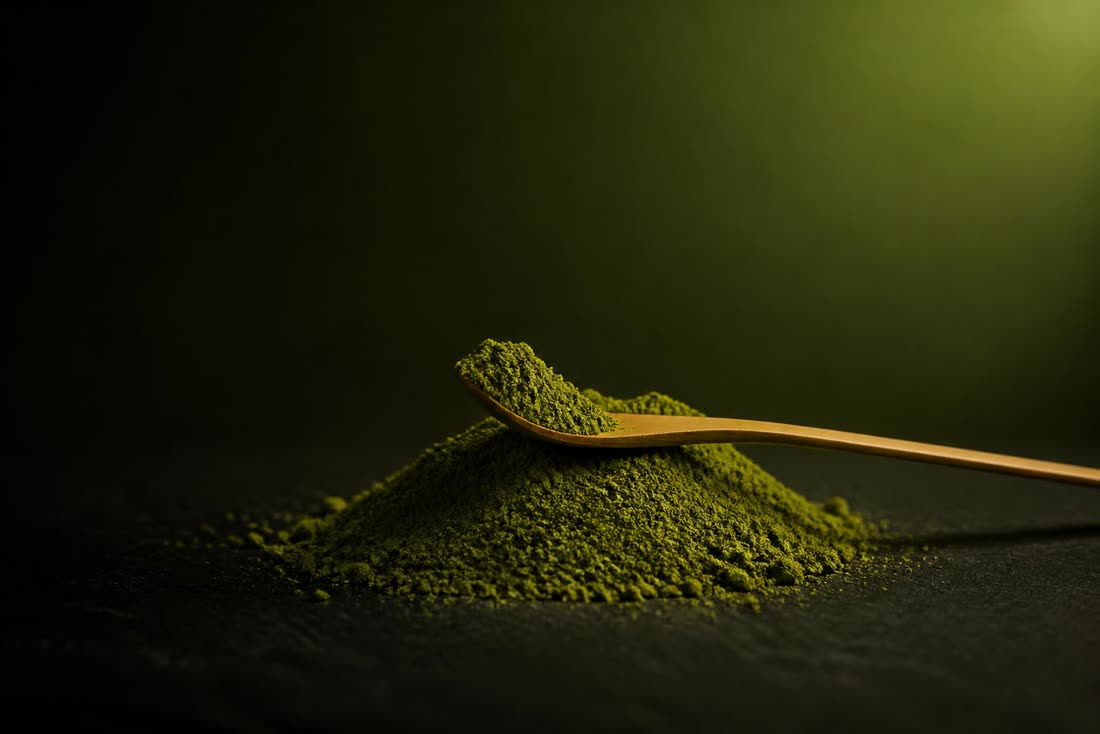
- Fine as face powder, never gritty when you rub it between your fingers
Ground slowly, on stone
After harvest the leaves are steamed, dried, and stripped of stems and veins. What is left is called tencha. Tencha goes into a granite mill that turns at roughly 30 revolutions a minute and produces about 30 to 40 grams of matcha an hour.
That is not inefficiency. It is the whole point. Grind it faster and friction heats the powder, and heat burns off the aroma the farmer spent a month in the shade building.
One tin, one hour
At mill speed, a single 50 g tin of ceremonial matcha is well over an hour of grinding. It is the slowest step in the entire process, and the one nobody can shortcut.
You drink the leaf, not the water
Steeped tea is an extraction. Hot water pulls some of what is in the leaf, and then the leaf goes in the bin. With matcha there is nothing left to throw away — the powder stays suspended in the water and you swallow all of it.
So more of what was in the leaf actually reaches you: the caffeine, the catechins, and the L-theanine that the shading protected. That last pairing — caffeine alongside L-theanine — is why people so often describe matcha's lift as steadier than coffee's, without the same drop an hour later.
Grades, plainly
Grade names are marketing language, not a regulated standard. Nobody audits them. What actually separates one tin from the next is when the leaf was picked and how finely it was milled:
- Ceremonial — first harvest, the youngest leaves at the top of the bush. Sweet enough to drink with nothing but water.
- Premium — first or early second harvest. A little more astringent, and excellent under milk in a latte.
- Culinary — later harvests, ground coarser. Built to survive sugar, heat and butter in baking.
If it needs sugar to be drinkable, it was never ceremonial.Every honest tea seller, eventually
How to whisk a bowl that isn't lumpy
- Sift 2 g — about one heaped scoop — into a dry, warm bowl. Skipping this is the single most common cause of lumps.
- Add 60 ml of water at about 80 °C. Straight off the boil scalds the leaf and turns it bitter.
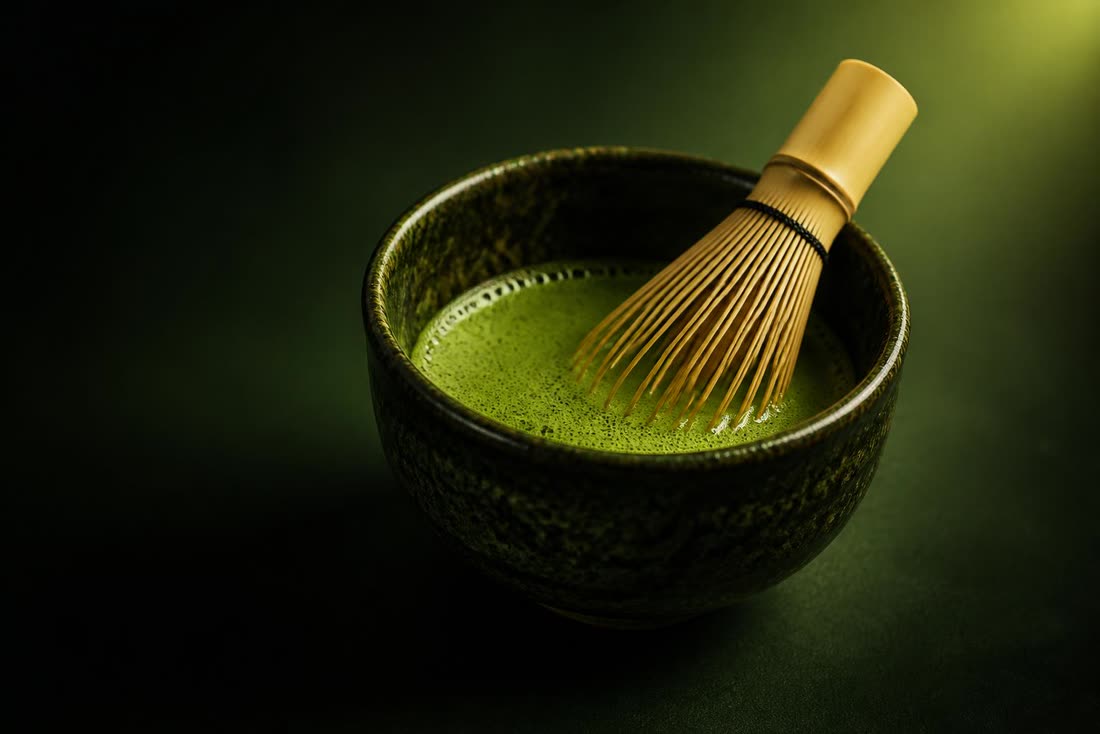
- Whisk fast in a W or M motion, wrist only, for 15 to 20 seconds. Not circles — circles push the powder to the sides.
- Stop at the foam. When the surface holds a fine, even crema, it is done. Drink it within a minute or two.
For a latte, use 3 to 5 g and only 40 ml of water, whisk it to a paste, then pour the milk in on top.
5 g makes one cup
Useful when you are working out how far a tin goes: a 50 g tin is about ten proper bowls, or a little more if you are drinking it straight.
Keeping it green
Matcha has four enemies: light, heat, air, and smell. It will absorb whatever is sitting next to it in the cupboard, so treat it more like ground coffee than like tea bags.
- An airtight tin, not the bag it arrived in
- The fridge is fine — but let the tin come back to room temperature before you open it, or condensation will ruin the powder
- Use it within a month or two of opening. It does not spoil, it just goes flat and dull
Everything BESTEA sells is first-harvest Japanese leaf, milled the slow way and shipped in tins that actually seal. If you want to taste the difference between a ceremonial bowl and the café powder you have been drinking, message us on Instagram — we deliver across Tbilisi.